
➡️ Introduction to SMO Social Media Optimization (SMO) is the process of optimizing social media profiles, content, and activities to improve visibility, engagement, audience reach, brand awareness, and website traffic. It helps businesses make better use of platforms such as Instagram, Facebook, LinkedIn, YouTube, and Pinterest. What Is Social Media Optimization? Social Media Optimization (SMO) means improving your social media profiles and content so that more people can discover and interact with your brand. Why Is SMO Important? SMO is important because social media can help a business reach its target audience and build a strong online presence. How Does SMO Work? SMO works by optimizing your social media presence and continuously improving your content based on audience response. Benefits of SMO A good SMO strategy can provide several benefits to a business or personal brand. ➡️ SMO Tools and Analytics SMO Tools and Analytics help you create, manage, analyze, and improve your social media activities. They help you understand what content is working and how your audience is responding. Social Media Analytics Scheduling tools help you plan and publish posts automatically at a specific date and time. They are useful for maintaining a consistent posting schedule. Content Creation Tools Content creation tools help you create images, videos, Reels, Stories, thumbnails, and infographics for social media. Hashtag Research Hashtag research means finding relevant hashtags related to your content and audience. Relevant hashtags can help users discover your posts. Competitor Analysis Competitor analysis means studying what similar businesses or creators are doing on social media. You can look at their content, posting frequency, engagement, and popular topics. ➡️ Social Media Content Optimization Social Media Content Optimization means improving your social media posts so they are useful, attractive, relevant, and easy for your audience to understand. It can help increase visibility and engagement. Content Quality Content quality means creating useful, original, relevant, and valuable content for your audience. Captions Captions explain your post and help attract the audience’s attention. A good caption should be clear, interesting, and relevant. Hashtags Hashtags help categorize your content and make it easier for people to discover relevant posts. Keywords Keywords are words or phrases that describe your content. Use relevant keywords naturally in your captions, titles, descriptions, and profiles. Images Images make your posts more attractive and easier to understand. Use clear, high-quality images that match your topic. Videos Videos can explain information quickly and encourage engagement. You can create Reels, tutorials, tips, demonstrations, and educational videos. ➡️ SMO Strategy SMO Strategy is a planned approach to improve your social media presence, reach the right audience, increase engagement, and achieve your business goals. Goal Setting Decide what you want to achieve through social media, such as increasing followers, engagement, website traffic, Target Audience Identify the people you want to reach based on their interests, needs, location, age, and online behavior. Content Strategy Plan what type of content you will create, such as educational posts, videos, tips, infographics, or promotional content Content Calendar Create a schedule showing what content to post, on which day, and on which platform. Posting Schedule Decide how often and when you will publish your content to maintain consistency. Performance Tracking Measure your results using metrics such as reach, engagement, followers, shares, website clicks, leads, and conversions. Platform Selection Choose the social media platforms where your target audience is most active, such as Instagram, LinkedIn, Facebook, or YouTube. ➡️ Platform-Specific SMO Platform-Specific SMO means optimizing your social media profile and content according to the specific platform you are using. Each platform has different audiences, content formats, and optimization methods. Instagram SMO Optimize your Instagram profile, bio, captions, hashtags, Reels, Stories, and visual content to increase reach and engagement. Facebook SMO Optimize your Facebook Page, business information, posts, images, videos, and community activities to reach your target audience. LinkedIn SMO Optimize your LinkedIn profile or company page using relevant keywords, professional content, articles, and industry-related posts. YouTube SMO Optimize your YouTube channel, video titles, descriptions, thumbnails, keywords, and tags to improve video discoverability and engagement. X (Twitter) SMO Optimize your profile, posts, hashtags, keywords, and engagement to improve visibility and interaction on X.Simple Structure SEO: The Complete Guide to Search Engine Optimization
SEO: The Complete Guide to Search Engine Optimization
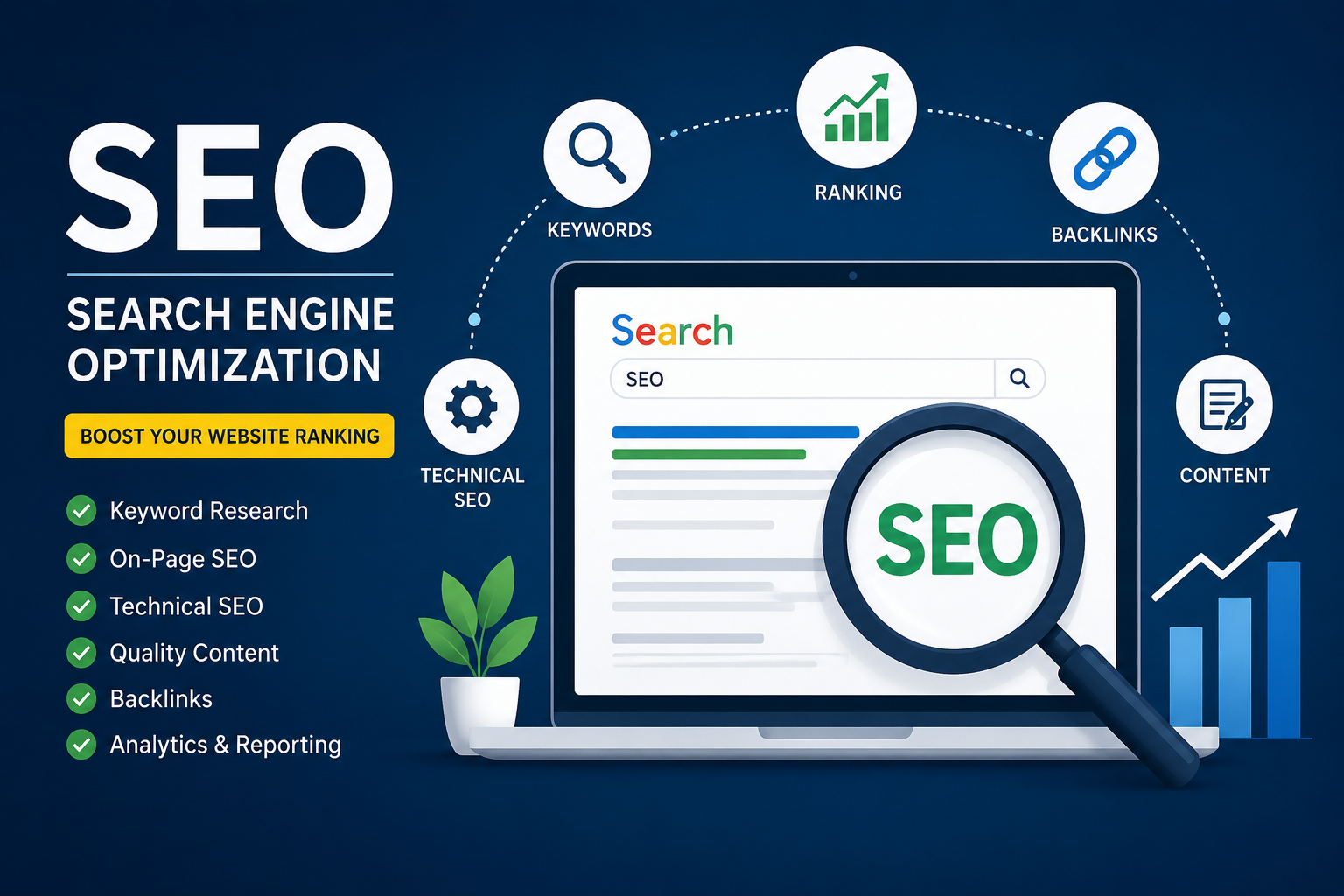
Search Engine Optimization (SEO) is the process of improving a website so that it can appear higher in search engine results and reach the right audience. A good SEO strategy helps search engines understand your website and makes it easier for people to find your content when they search for relevant topics. In this complete guide to SEO, you will learn the key areas of search engine optimization, including keyword research, on-page SEO, off-page SEO, technical SEO, local SEO, and SEO performance tracking. Whether you are a beginner or looking to improve your existing SEO knowledge, this guide will help you understand the fundamentals and build a stronger SEO strategy. ➡️ On-Page SEO: Complete Guide On-page SEO is the process of optimizing the content and HTML elements on your own website pages to help search engines understand your content and improve its visibility in search results. Keyword Optimization Keyword optimization is the process of choosing the right keywords and using them naturally in your website content so that search engines understand your page and show it for relevant searches. Title Tag Optimization The SEO title is the clickable headline that usually appears in Google search results. Meta Description A meta description is a short summary of a webpage that can appear below the SEO title in Google search results.Example: Heading Optimization Heading optimization is the process of using headings such as H1, H2, and H3 correctly on a webpage to organize content and help search engines understand the page structure. ➡️ Off-Page SEO: Complete Guide On-page SEO is the process of optimizing the content and HTML elements on your own website pages to help search engines understand your content and improve its visibility in search results. Link Building What Is Link Building in SEO?Link building is the process of getting links from other websites to your website. These links are called backlinks. Backlinks Backlinks are links from another website to your website. Guest Posting Guest posting is an SEO technique where you write and publish an article on another website. Usually, you can include a link back to your own website, which can help with backlinks, referral traffic, and brand visibility. Social Media & SEO Social media means online platforms where people and businesses create, share, and interact with content. ➡️ Technical SEO: Complete Guide Technical SEO is the process of improving the technical parts of a website so that search engines like Google can crawl, understand, and index your website easily. Website Speed Optimization Website Speed Optimization is the process of making a website load faster and work smoothly for visitors. Mobile SEO Is the process of optimizing your website so it performs well, loads quickly, and provides a great user experience on smartphones and tablets. The goal is to improve your rankings in search engines and make it easy for mobile users to browse your Crawlability Crawlability is the ability of search engine bots, such as Googlebot, to access and crawl the pages of your website. Indexing SEO indexing is the process by which search engines like Google analyze and store webpages in their database, called the search index. ➡️ Local SEO: Complete Guide Local SEO (Local Search Engine Optimization) is the process of optimizing a website and online presence to help a local business appear in search results for people searching in a specific location Google Business Profile SEO Optimizing your Google Business Profile with the correct business name, address, phone number, services, photos, and business hours. Local On-Page SEO Adding location-based keywords to your website, such as “Digital Marketing Freelancer in Bangalore.” Local Citations Listing your business on online directories and platforms with consistent Name, Address, and Phone Number (NAP) information. Local Link Building Getting backlinks from relevant local websites, blogs, newspapers, organizations, or business directories